


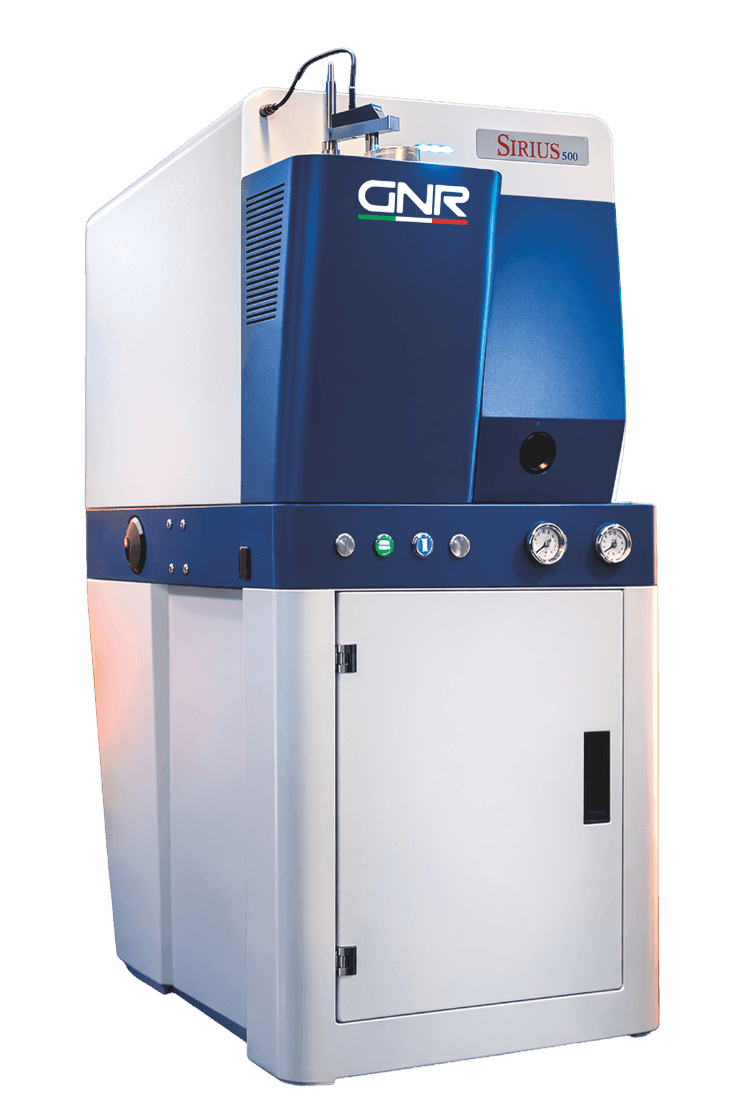
Optical Emission Spectrometers (OES) are advanced analytical instruments that determine the elemental chemical composition of metals and alloys within seconds, with minimal or no sample preparation. They are the industry-standard analysis method in foundries, steel production, aluminum casting, automotive, aerospace, and defense — wherever material quality is critical.
An Optical Emission Spectrometer (OES) is a spectroscopic instrument used for the elemental analysis of metal samples. The device excites the sample surface using a high-energy spark or arc discharge, then separates the emitted light by wavelength to calculate the concentration of each element present.
Also known as Spark-OES or Arc-OES, this method is one of the most widely used techniques in the world for determining the chemical composition of metals.
Total analysis time: Typically 20–60 seconds.
Application Areas for Metal Analysis Spectrometers
| Sector | Application |
| Foundry & Steel Production | Alloy composition verification, melt control |
| Automotive | Incoming material acceptance, production line QC |
| Aerospace & Defense | Critical component material certification |
| Recycling & Scrap | Material sorting and purity control |
| Pipe & Valve Manufacturing | Raw material and semi-finished product analysis |
| Research & Development | New alloy development and material characterization |
| Quality Control Laboratories | Routine analysis within accreditation scope |
GNR Analytical Instruments (Italy) has been a globally recognized manufacturer of optical emission spectrometers since 1985. Key advantages of GNR systems:
With over 20 years of experience, Anka Analitik is the sole authorized distributor and certified service center for GNR spectrometers in Turkey.
✔ Installation and commissioning
✔ Application-specific calibration and method development
✔ Spare parts and consumables supply
✔ Periodic maintenance and calibration services
✔ Operator and technical training programs
✔ 24/7 phone technical support
Contact us now for detailed information and pricing options for our devices.