Digital Casting and Binder Jetting Technology
Produce precise sand molds within days directly from your CAD file — no patterns, no core boxes. Complex geometries, internal channels and thin walls are no longer a problem. Cut week-long processes down to hours.
Core Technology
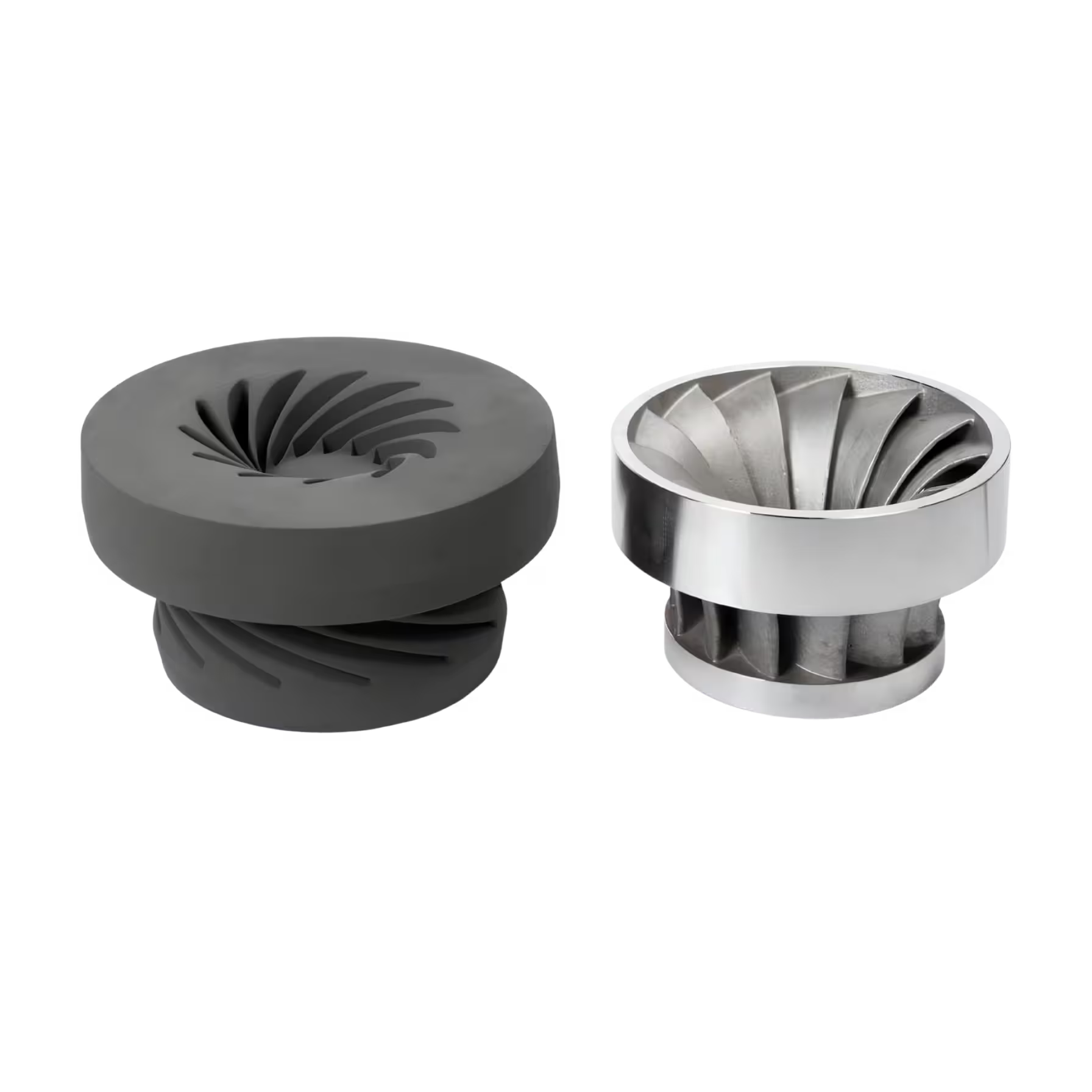
Binder Jetting is an industrial 3D printing technology that builds three-dimensional molds and cores layer by layer by selectively jetting a liquid binder (resin) onto powdered sand. The entire process starts from digital CAD data; no physical pattern is required.
Why 3D Sand Molding?
Five core benefits that make this technology an industry leader.
Comparison
Why are hundreds of foundries and engineering firms abandoning conventional mold production?
| Criterion | Conventional Sand Mold | 3D Binder Jetting |
|---|---|---|
| Production Time | Weeks / months for pattern and core box | Ready mold within days from a digital file |
| Design Freedom | Serious geometry constraints | Unlimited — undercuts, internal channels, complex geometry |
| Core Production | Separate core box and process required | Core and mold in a single print, one piece |
| Revision Cost | New pattern cost per revision | Instant revisions, zero additional cost |
| Surface Quality | Low, heavy finishing required | Better surface quality than conventional |
| Prototyping | Very high unit cost in small batches | Prototype to series with the same system |
| Storage | Pattern warehouse, space and maintenance cost | No patterns — only a digital file is stored |
System Components
3D Binder Jetting systems consist of 7 core subsystems that automatically manage the entire process from digital file to ready mold.
| No | Component | Function |
|---|---|---|
| 01 | Mixing System | Blends sand and binder in homogeneous proportions under constant temperature control. |
| 02 | Sand Bucket | Stores different sand types (quartz, ceramic, chromite) separately and feeds on demand. |
| 03 | Laying & Printing System | Performs sand laying with a bidirectional recoater and binder jetting with the inkjet print head in a single pass. |
| 04 | RGV (Rail-Guided Vehicle) | Automatically transfers job boxes between printing, cleaning and storage stations. |
| 05 | Printing Job Box | The movable box where printing takes place. Its quick-swap design reduces machine downtime to zero. |
| 06 | Cleaning Station | Removes unbound loose sand with compressed air and vibration (depowdering). |
| 07 | Used Sand Recycling | Sieves, filters and regenerates used sand to prepare it for printing again in a closed loop. |
Material Compatibility
3D Binder Jetting systems are fully compatible with the industry's most common sand and resin types. The optimal combination can be selected for different casting alloys.
| Sand Type | Typical Application |
|---|---|
| Quartz / Silica Sand | General-purpose castings (iron, steel, aluminium) |
| Ceramic Sand | High-temperature castings (titanium, nickel superalloys) |
| Chromite Sand | Stainless steel, heavy castings (low thermal expansion) |
| Zircon Sand | Precision casting, applications requiring fine surface quality |
| Binder (Resin) | Properties |
|---|---|
| Furan Resin | High strength, general purpose, low cost |
| Phenolic Resin | Better thermal stability, suitable for steel castings |
| Inorganic Binder | No VOC emissions, fully compliant with environmental regulations, safer working environment — ideal for clean production |
Applications
Frequently Asked Questions
It is suitable for almost all casting alloys, including aluminium, magnesium, cast iron (gray, ductile), steel (stainless, carbon) and high-temperature superalloys (titanium, nickel-based). The only constraint is that the binder must burn off at the casting temperature so it separates cleanly from the mold.
For short and medium runs (<1000 pieces), 3D sand mold cost is lower than conventional because there is no pattern or core-box cost. Single-piece consolidation, zero revision cost and no inventory cost continuously reduce total cost of ownership (TCO). Pattern storage, maintenance and logistics costs are also eliminated entirely.
Thanks to the 400 dpi print resolution, surface quality is significantly better than conventional sand molds. Most casting applications need no extra finishing (grinding, filling). For special applications requiring very high surface quality, light grinding can be applied.
The industry-standard STL file format is supported on all systems. Neutral formats such as STEP and IGES can also be imported via pre-processing software.
No thermal insulation room is required; a standard industrial environment (5–35°C) is sufficient. Requirements: 380V three-phase power, 6–8 bar compressed air, an exhaust connection and a concrete floor sized to the machine. Total space need is determined by the supplier's engineers via an on-site survey.
Quote & Information
Share your foundry capacity, part dimensions, and annual production volume — we'll help you identify the right AJS model. Demo print requests are also welcome.